US Navy pilots shot down Red Sea
Introduction
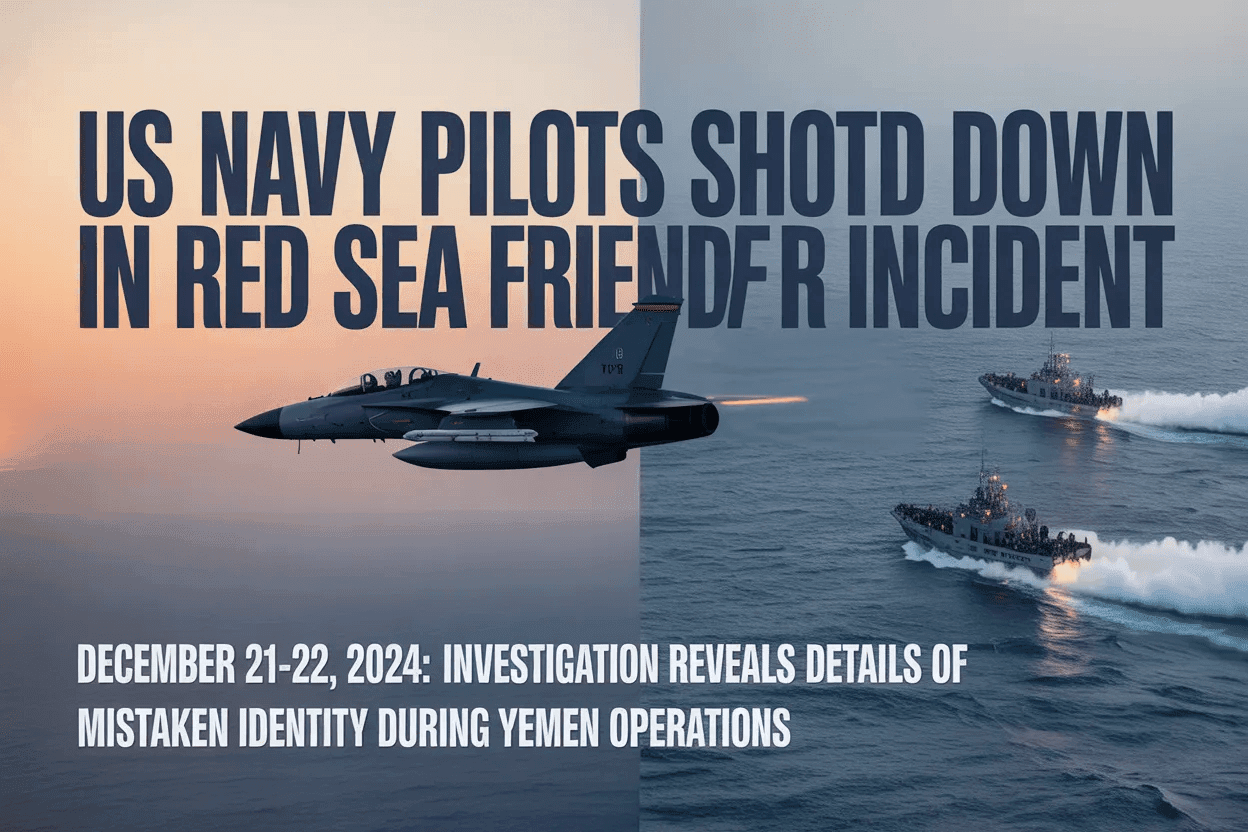
On December 21–22, 2024, a dramatic and frightening event unfolded over the Red Sea. A U.S. Navy fighter was struck in what the military called an apparent case of friendly fire. Both aircrew ejected and were rescued alive. News of the event spread fast and raised many questions. People wanted clear answers about how two service members came to be shot down by friendly forces.
This article explains the facts, the context, and what the investigation found. It also offers plain-language explanations and thoughtful commentary on how such accidents happen and how they can be reduced. The phrase us navy pilots shot down red sea will be used naturally to keep this article focused and searchable for readers seeking reliable information.
What exactly happened over the Red Sea?
Late in the evening of December 21, 2024, U.S. military officials said a U.S. fighter jet was mistakenly shot down over the Red Sea. Two crew members ejected safely. Rescue teams recovered them, with one suffering minor injuries. The shoot-down came during operations aimed at countering missile and drone attacks tied to the conflict in Yemen. At the time, U.S. forces were intercepting threats from groups that had attacked shipping and U.S. warships in the region. The downed jet and its crew became the most visible and worrying moment in an already tense campaign. The basic facts — a friendly-fire downing, ejection, and rescue — were reported by major outlets.
Why did this happen? A short, clear explanation
Friendly-fire incidents happen when systems or people misidentify a friendly aircraft as a threat. In this case, the Navy’s escorts and air defenses were highly alert. They had recently faced real missile threats from Houthi forces. That environment raised the stress level. Investigations later pointed to a mix of degraded systems, human errors, and operational pressure. Problems cited included faulty identification signals, poor situational awareness, and crew fatigue aboard one of the ships involved. Those failures combined in a way that led a U.S. warship to fire on its own aircraft. This pattern — system trouble plus stress plus human mistakes — is sadly not new in combat zones.
The human story: the pilots and their rescue
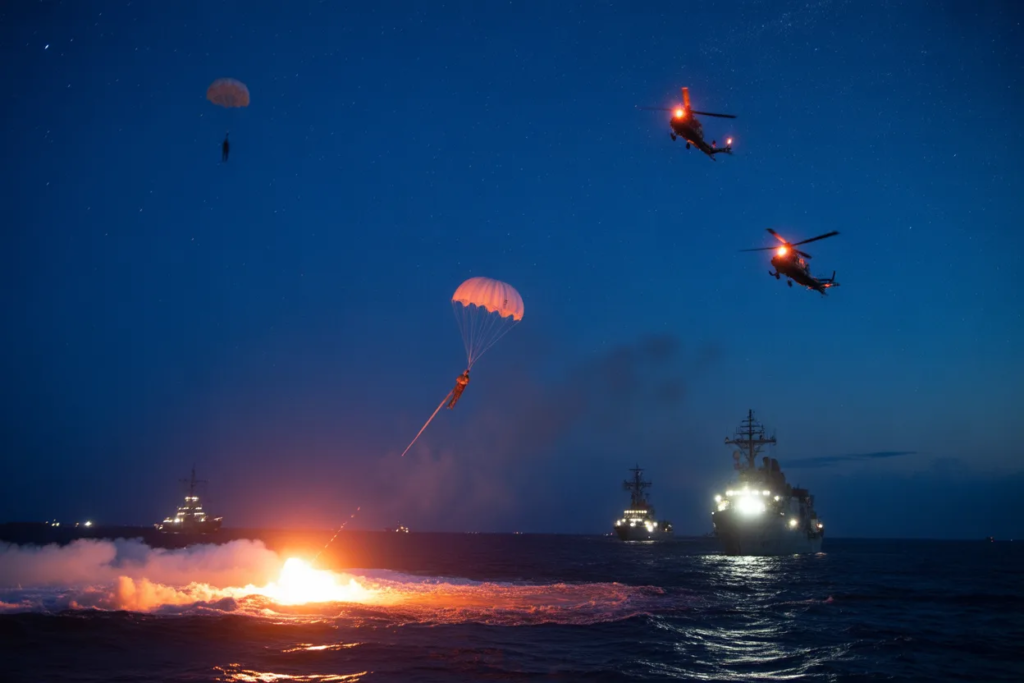
The two officers in the jet were a pilot and a weapons officer. They ejected when the aircraft was hit. Rescue crews raced to recover them from the sea. Navy and allied forces use fast helicopters and small boats for such rescues. Both aircrew survived. One had only minor injuries, according to official statements. The safe recovery was a relief to many. It also highlighted both the skill of the aircrew and the value of practiced rescue procedures. Still, returning home alive does not erase the trauma of being shot at by your own side. Many veterans and families felt deep worry and anger about the root causes.
The military context: why U.S. forces were in the Red Sea
U.S. Navy ships and aircraft have operated in the Red Sea and nearby waters for years. Their missions include protecting commercial shipping and deterring attacks by militant groups. Since 2021–2024, Houthi forces in Yemen had stepped up attacks on ships. The U.S. and allies responded with strikes and patrols. That activity made the Red Sea a tense place. Ships used air defenses to stop incoming missiles. Aircraft flew combat missions and patrols. In that environment, friendly forces sometimes operate very close to one another. When stress is high, mistakes can become deadly. Knowing this helps explain why an incident like us navy pilots shot down red sea could happen.
What the official investigations found
In late 2025 the Navy released detailed findings from probes into several mishaps on one carrier strike group. Investigators found multiple failures that led to the tragic chain of events. For the friendly-fire shoot-down, they pointed to identification-system problems aboard a cruiser. They also found that personnel were fatigued and overloaded. The ship’s crew had been under heavy operational strain. That contributed to poor judgment and breakdowns in communication. The report called for fixes in training, equipment readiness, and command oversight. Those reforms aim to prevent another case where us navy pilots shot down red sea becomes a repeating headline.
Technical factors: how identification systems can fail
Modern warships use radar and friend-or-foe transponders to track aircraft. These systems are complex. They rely on software, hardware, and clear procedures. If a transponder fails or a radar feed is misread, an aircraft can look like an incoming threat. In addition, electronic warfare or clutter from nearby missiles can confuse systems. Investigators found that at least one ship had degraded interoperability and identification systems. When people have to make a split-second call under stress, they can make the wrong one. That is how technology failures and human judgment can combine to produce a friendly-fire downing.

The role of training, procedures, and fatigue
Training and clear procedures are the best shields against accidents. But training can wear thin under high operational tempo. Crews can grow tired from long deployments. The investigations found fatigue and lapses in training. Those factors make it harder for crews to follow complex procedures correctly. When procedures break down, mistakes multiply. The Navy’s report recommended more realistic drills, better staffing, and limits on continuous high-alert periods. These changes aim to lower the risk that stress will turn into tragedy again. Fixing culture and training is as important as fixing gear.
Other mishaps on the same deployment — a pattern, not a single event
The downing of the jet was not the only accident on that carrier group’s deployment. Investigations showed at least two other Super Hornets lost at sea, and a collision with a merchant ship. One jet rolled off the deck during an evasive maneuver. Another was lost during a landing failure tied to faulty equipment. When multiple problems cluster on a single deployment, it suggests systemic issues. These include maintenance shortfalls, high operational tempo, and leadership gaps. That pattern helps explain why the us navy pilots shot down red sea story caused broader concern about readiness.
International and political fallout
An incident like this is not just a military story. It has political effects too. Allies and partners watch closely. Domestic critics ask tough questions. Lawmakers can call for hearings and tighter oversight. The public may worry about mission purpose and cost. In this case, media outlets and congress members pressed the Pentagon for answers. The incident fed broader debates about U.S. policy in the Middle East. It also raised questions about how the military balances speed of action with caution. The label us navy pilots shot down red sea shows how a single event can shape public debate.
How the Navy responded and what changes were ordered
After the investigations, Navy leaders pledged reforms. They called for upgrades to shipboard identification systems. They recommended more training and better rest cycles for crews. Leaders also ordered reviews of command procedures used during high-threat operations. The aim was to reduce chances of misidentification under stress. The Navy said it would hold accountable any leaders responsible for lapses. These moves are steps to restore trust among sailors, lawmakers, and the public. They also aim to lower the odds that future headlines will again read us navy pilots shot down red sea.
What this teaches us about risk in modern warfare
Modern combat mixes fast weapons with digital systems. That mix gives great power. But it also increases risk. Small tech glitches can scale quickly. Human decisions made under pressure shape outcomes. The us navy pilots shot down red sea event shows how risk multiplies when weapons, people, and stress collide. Good design, realistic training, and a safety culture reduce risk. They cannot remove danger entirely, but they help stop avoidable losses. Policymakers must weigh the value of missions against the risk to service members. Clearer limits and better equipment can save lives.

How families and the public can think about these events
Hearing that us navy pilots shot down red sea can be shocking. It can cause fear and anger. Families deserve clear answers and support. The Navy typically offers counseling and briefings after such incidents. The public benefits from calm facts, not rumors. Media reports should stress verified facts and sources. Citizens can ask their leaders for transparency. They can also learn that the military is complex and that errors often have many causes. Demanding both accountability and better care for service members is the fair response.
Lessons for prevention: policy and practical steps
What concrete steps reduce the chance of friendly-fire tragedies? First, fix and test identification systems more often. Second, reduce deployment fatigue by staffing ships better. Third, run realistic joint drills that mirror combat stress. Fourth, empower crews to pause and confirm targets when possible. Fifth, improve how ships and aircraft share data in real time. The Navy’s post-incident orders aimed at these steps. If these changes are implemented well, they will lower the odds that future headlines include us navy pilots shot down red sea.
Remembering the people behind the headlines
Beyond policy debates, there are the sailors, pilots, and families who lived this event. Their courage and training kept two aircrew alive. The trauma, worry, and near-loss they experienced matters. So does the duty of leaders to learn from mistakes. When media, lawmakers, and citizens press for change, they help honor that service. The goal is to make sure no more families need to face the news that us navy pilots shot down red sea. That is the human lesson we should carry forward.
Conclusion — US Navy pilots shot down Red Sea
The us navy pilots shot down red sea story shows how modern conflict can create rare but terrible accidents. We learned that a mix of tech problems, human error, and stress can trigger a friendly-fire downing. We also saw fast rescue and survival. Lessons now include better equipment checks, improved training, and stronger leadership. Readers should ask their leaders for transparency and support for service members. Above all, we must value changes that protect lives. If policymakers act on the findings and the Navy implements reforms, this painful lesson can make operations safer for the future.
Frequently Asked Questions US Navy pilots shot down Red Sea
Q1: When did the shoot-down happen?
A1: The incident occurred on December 21–22, 2024. That is when U.S. officials reported a friendly-fire downing over the Red Sea and the recovery of the aircrew.
Q2: Who shot the jet down?
A2: U.S. military statements and later investigative reporting indicated the jet was likely shot down by U.S. forces in a mistaken engagement. Investigations named degraded shipboard systems and human errors as causes.
Q3: Were the pilots rescued?
A3: Yes. The two-person crew ejected and were recovered alive. One had minor injuries. Rescuers used standard search-and-rescue assets to reach them.
Q4: Was this related to the Houthi conflict in Yemen?
A4: The operations were part of broader U.S. and allied efforts to counter missile and drone attacks tied to the Yemen conflict. That operational context raised threat levels in the Red Sea.
Q5: What did the Navy change after the incident?
A5: The Navy ordered investigations and recommended fixes. These included better identification system maintenance, more training, reduced crew fatigue, and stronger command oversight.
Q6: How common are friendly-fire incidents?
A6: Friendly-fire events are rare but not unknown. They occur more often in chaotic, high-threat environments. Improvements in systems and training have reduced their frequency, but risk remains when stress and system failures align.
Notes on sources and reliability
This article draws on reporting from major news organizations and defense-focused outlets. Key reports used include Reuters, the Associated Press, CBS News, The Washington Post, and U.S. Naval Institute summaries of the Navy’s investigations. These outlets reported the initial incident, the rescue of the crew, and later investigative findings. For readers seeking the primary sources, look for the Navy’s official investigation releases and mainstream coverage from December 2024 and the Navy report releases in December 2025.
You May Also Like To More Informative Blogs Click Here
About the Author