Quordle
Quordle: The Daily Word Game That Trains Your Brain (Without Feeling Like Homework)
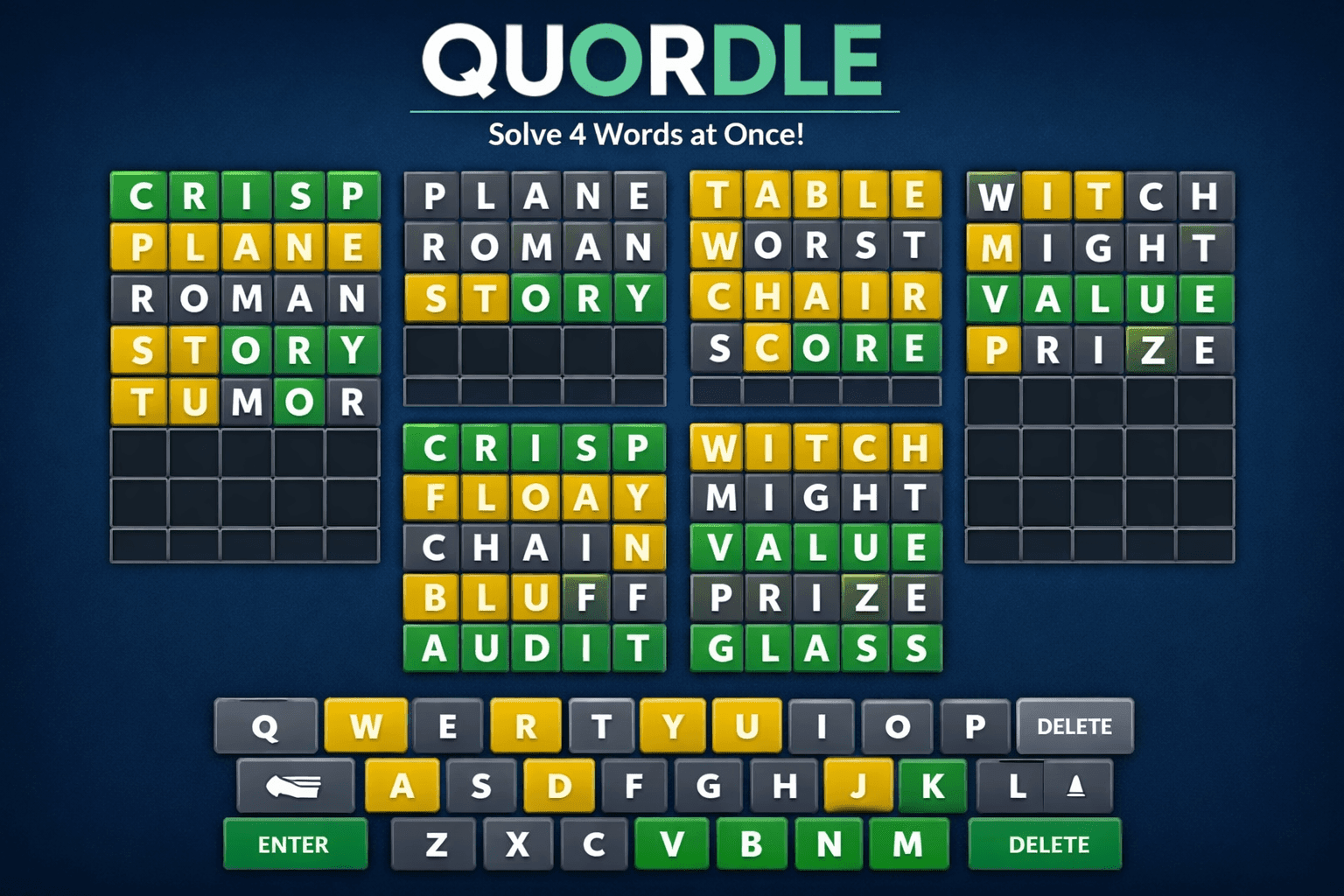
If Wordle feels “too quick” and you want a bigger challenge, quordle is the perfect next step. You solve four word puzzles at the same time, using the same guesses. It sounds wild at first, but it becomes addictive fast — like a smart mini workout you can do in minutes.
What is quordle, and why do people love it?
Quordle is a daily word puzzle that asks you to solve four secret words at the same time. You type one guess, and that guess is tested on all four boards together. This is the whole charm of the game. One move can help you in one corner, but confuse you in another. So you learn to think in layers. It feels like a small adventure, not a test.
People love quordle because it is simple to start, yet hard to master. You don’t need special tools, and you don’t need perfect spelling skills. You just need patience and a plan. It also feels social. Many players share their results and compare strategies without giving away answers. That makes the daily routine feel friendly, like a little club that meets every day.
How the quordle game works (in plain words)
The quordle game follows a simple rule: you guess words, and the puzzle gives color feedback. A letter might be in the right place, in the word but in a different place, or not in the word at all. The big difference is that you are doing this on four boards at once. That means each guess should try to “do work” for more than one board.
Here is what most players learn quickly: early guesses are for information, and later guesses are for finishing. In the first few turns, you want to test common letters and vowel patterns. Then you shift into “solve mode” and lock down each board. This switch is the key skill in quordle puzzles. When you learn when to switch, your win rate jumps.
What “quordle today” really means
When someone says “quordle today,” they usually mean the daily puzzle that resets once every day. It is the same set of four words for everyone that day. That shared experience is why daily word games become habits. You wake up, you try the puzzle, you learn something new, and you move on. It feels small, but the habit adds up.
The smart way to treat “today’s” puzzle is to treat it like a short story. You start with a few broad guesses, you collect clues, then you close the case. If you rush, you waste turns. If you go too slow, you might run out of space. The best players balance speed with calm thinking. That balance is what makes quordle feel so satisfying.
How to use a quordle hint without ruining the fun
A good quordle hint should feel like a flashlight, not a full map. The goal is to keep your brain working while removing frustration. The best hints do not give the exact answer. Instead, they nudge you toward a pattern: maybe the word ends with a common sound, or it uses a double letter, or it’s a familiar everyday object.
If you like hint-style help, use it at the right moment. Try at least four guesses first. Then, when you have a board that feels stuck, get a small push and return to solving on your own. If you want a safe place to check hint-style help, here is your requested link with the exact anchor text: quordle hint.
The quordle sequence: why order matters
Many players talk about the quordle sequence without realizing they already use it. Sequence simply means the order of your thinking. In quordle, it is easy to bounce between boards and lose focus. Sequence fixes that. You decide a rhythm: “collect clues,” then “solve easiest board,” then “solve next,” and so on.
A clean sequence saves turns because each solved board reduces noise. Once a board is solved, you stop worrying about it. That mental space becomes extra power for the remaining boards. Think of it like cleaning a desk. If your desk is full, you can’t work fast. When the desk is clear, everything feels easier. That is the secret of strong quordle puzzles.
A beginner-friendly strategy that actually works
If you are new, don’t try to be fancy. Use a simple plan that gives you good information quickly. First, choose opening guesses that include common letters and at least two vowels. Then watch which boards light up. After that, narrow down one board at a time. This is how you stop random guessing and start solving with confidence.
The biggest mistake beginners make in the quordle game is chasing one board too early. You see a few correct letters and you get excited. Then you spend three guesses trying to finish that board, while the other boards stay empty. Try the opposite: build information first, then finish. You’ll feel the difference within a week of daily play.
Gather clues
Use early guesses to test vowels and high-use letters.
Pick one board
Finish the most “clear” board first to reduce stress.
Lock patterns
Use confirmed letters to avoid wasting turns.
How to avoid “trap words” in quordle
Trap words are the reason people lose late. A trap happens when multiple words fit the same pattern. For example, you might have something like _ A _ E _ and you can imagine several options. In quordle, traps are worse because a wrong choice costs you on four boards at once. The fix is to use “tester guesses.”
A tester guess is a word you play mainly to check letters, not to solve. You pick letters that separate the possible answers. You do not need the perfect word; you need useful letters. This approach feels slow, but it saves turns. If you practice this, your quordle today results become more stable and less lucky.
Quordle merriam-webster: why that name shows up
Many players search “quordle merriam-webster” because they notice the dictionary brand connected with word play. Even if you don’t care about the business side, the idea is simple: strong word games often lean on strong language culture. That’s why daily puzzles feel “official” when they sit near dictionary-style thinking.
The best way to use this idea is practical. When you don’t know a word, treat it as a learning moment, not a failure. If you meet a new term during quordle puzzles, remember its shape: vowels, endings, and common letter pairs. Over time, you build a mental library. That library is what makes the quordle game feel easier without becoming boring.
Real examples that show how good players think
Here is a simple example of “good thinking” without giving away any actual answers. Imagine Board A shows you two vowels are correct but in the wrong places. Board B shows a common consonant is correct and fixed. Board C is almost empty. Board D has one strong clue. A weak approach is to chase Board B because it feels close. A strong approach is to pick a guess that tests letters that help Board A, C, and D together.
That is the mindset that wins at quordle. You choose guesses that help the most boards at once. You also accept that some guesses are “sacrifices” that give information. The game rewards calm planning. If you enjoy puzzles because they make you feel focused and present, quordle today can become a small daily reset for your mind.
How to get faster without guessing like a robot
Speed in quordle comes from pattern comfort, not from rushing. The more often you see common endings, the faster you recognize them. Think of endings like -ER, -ED, -ING, -LY, and simple blends like CH, SH, TH, and TR. You don’t need to memorize a list. You just need to notice them when they appear.
A great habit is to review your finished boards for ten seconds. Ask: “What was the clue that solved it?” Maybe it was one vowel, or a rare letter, or a repeated consonant. This tiny reflection trains your brain. In a week, you will notice more patterns. In a month, you will feel more confident. That is how the quordle sequence becomes natural.
Common mistakes that quietly ruin a winning run
The first common mistake is using guesses that repeat the same letters too early. Repeating letters can be useful later, but early on you want coverage. Another mistake is ignoring one board. People often focus on three boards and hope the fourth “works out.” It usually doesn’t. In the quordle game, every board needs attention, even if it’s only one guess.
The third mistake is emotional guessing. You get stuck, you feel annoyed, and you throw a random word. That random move often burns a turn and gives no new information. When you feel that moment coming, pause and pick a tester guess instead. This is where a light quordle hint style nudge can help too. Keep it helpful, keep it calm, and keep it yours.
How to build a daily routine that feels easy
The best routine is short and consistent. Pick a time when your mind is fresh: morning coffee, lunch break, or after dinner. Do quordle today first, then do one practice round if you have time. Practice helps because it removes pressure. You can try new openers and new approaches without worrying about your daily result.
Keep the habit light. If you miss a day, it’s fine. If you lose a puzzle, it’s fine. The value is the thinking, not perfection. Over time, you’ll notice you’re quicker at spotting letter patterns in everyday life too. That’s a cool side effect of daily word play. It’s like learning a skill quietly, without a big course or a big effort.
FAQs about quordle
Is quordle harder than Wordle?
What does “quordle today” mean?
How do I use a quordle hint without spoilers?
What is the quordle sequence?
Why do people search quordle merriam-webster?
Is quordle com the only place to play?
Conclusion: make quordle your “small daily win”
The best part of quordle is how quickly it becomes a skill. You start by guessing and hoping. Then you learn to plan. Then you start seeing patterns. And one day you notice you’re solving faster, with fewer mistakes, and with less stress. That’s the magic of a good quordle – daily word game. It teaches you without feeling like studying.
If you want to improve, remember three things: gather clues early, follow a clean quordle sequence, and use a quordle hint only as a gentle nudge. Keep it fun. Keep it human. And treat every puzzle as a short, satisfying brain workout you can actually enjoy.
About the Author