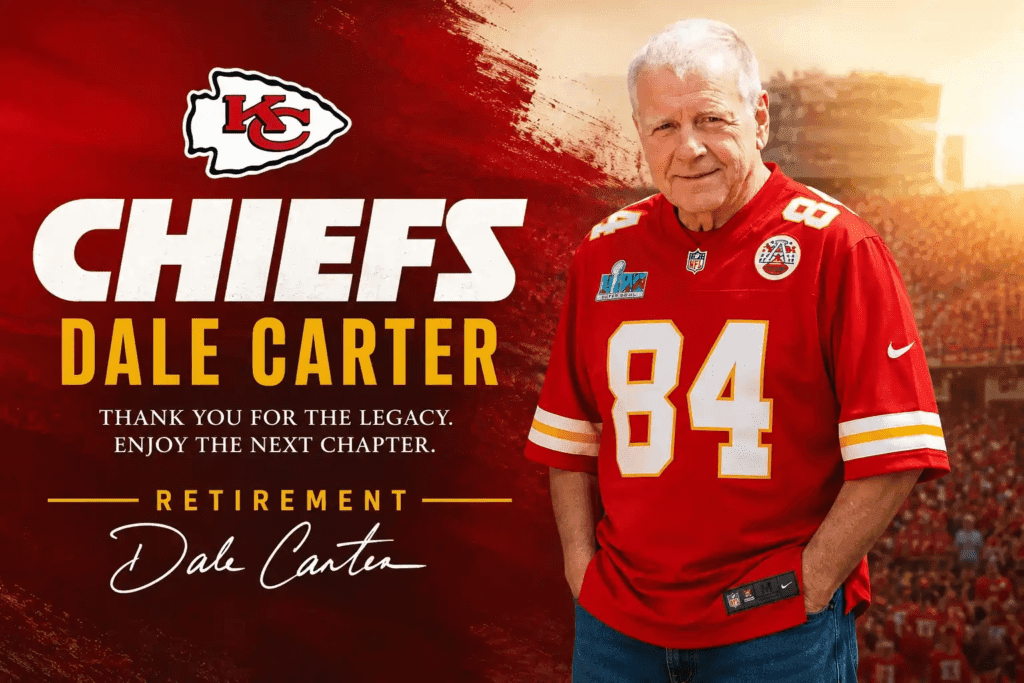
Dale Carter didn’t just play football; he flew across the turf with a rare blend of fury and finesse. When the Kansas City Chiefs Dale Carter retirement chapter closed, the league lost one of its most electric cornerbacks. His exit from the professional gridiron marked the end of a defensive era defined by instinct, speed, and a short memory essential for any great defensive back. This pillar page charts his explosive journey, his Super Bowl triumph, and where his path led after the roar of the crowd subsided.
The Electric Rise of Dale Carter in Kansas City
Before the Kansas City Chiefs Dale Carter retirement became reality, a star needed to be born. The Chiefs selected Carter in the first round of the 1992 NFL Draft out of Tennessee. He arrived at Arrowhead Stadium with a reputation for game-changing pace. As a rookie, he immediately transformed the secondary. He secured the NFL Defensive Rookie of the Year award by snagging seven interceptions and scoring two touchdowns.
His early years painted a picture of a man playing a different game than everyone else. Offenses feared throwing to his side of the field. Carter possessed a unique ability to bait quarterbacks into disastrous throws. He could close a 10-yard cushion in the blink of an eye. This aggressive style laid the foundation for his All-Pro trajectory.
A Timeline of Excellence: Key Career Moments
To understand the significance of the Kansas City Chiefs Dale Carter retirement, you must track the milestones. His career was a rollercoaster of high peaks and challenging valleys. He played for Kansas City, Denver, Minnesota, and Baltimore. Below is a table detailing the pivotal moments that defined his professional road.
| Year | Team | Career Milestone & Impact |
| 1992 | Kansas City Chiefs | Drafted 20th overall. Immediate starter who won Defensive Rookie of the Year with dynamic return skills. |
| 1994 | Kansas City Chiefs | Earned First-Team All-Pro honors. Led the Chiefs’ defense to a deep playoff run under Marty Schottenheimer. |
| 1995-96 | Kansas City Chiefs | Cemented reputation as a “shutdown corner,” making four consecutive Pro Bowl appearances. |
| 1997 | Kansas City Chiefs | Led the league in interception return yards, proving his threat as a defensive weapon anytime the ball hit his hands. |
| 1999 | Denver Broncos | Signed a massive free-agent contract, becoming one of the highest-paid defensive backs in league history. |
| 2000 | Denver Broncos | Faced a season-long league suspension, a significant turning point that interrupted his prime momentum. |
| 2004 | Baltimore Ravens | Played his final NFL snaps, closing the active chapter before the official Dale Carter retirement announcement. |
Why the Kansas City Chiefs Dale Carter Retirement Still Matters
The Kansas City Chiefs Dale Carter retirement didn’t erase his impact on the cornerback position. He belonged to a dying breed of press-man coverage specialists. Modern corners often rely on zone schemes, but Carter thrived on an island. He jammed receivers at the line and mirrored them stride for stride down the sideline.
His style influences how the Chiefs evaluate defensive talent today. Kansas City constantly searches for corners with that same “tackle-and-cover” mentality. Carter’s shadow looms large over a franchise that had struggled for decades to find a true lockdown presence in the secondary before his arrival. He set the standard for physicality that defensive coordinator Steve Spagnuolo values now.
Beyond the Numbers: Carter’s Playing Style and Technique
Raw stats can lie, but film never does. Dale Carter’s technique was a masterclass in risk versus reward. He played with a gambler’s heart. He often let receivers think they were open, only to undercut the route at the last second. His hip fluidity allowed him to transition from a backpedal to a full sprint without losing speed.
Tackling set him apart. Unlike many finesse corners, Carter hit like a linebacker. Running backs bouncing to the outside often met an unexpected stone wall. Official NFL player profiles frequently cite his physicality as a differentiating trait that earned him respect across the league.
The Super Bowl Journey: A Rocky Mountain Finale
Many fans forget that the Dale Carter retirement story includes a championship ring, though not with Kansas City. After his suspension and a brief exit from the game, Carter mounted a comeback. He joined the Baltimore Ravens but found his storybook ending with the Denver Broncos.
He contributed to the Broncos’ back-to-back Super Bowl victories in the late 1990s. Serving as a crucial veteran piece, he added depth to a secondary chasing glory. Lifting the Vince Lombardi Trophy provided a redemptive arc. It proved that his early dominance in Kansas City was no fluke, solidifying his legacy as a winner.
Life After the Final Whistle: Personal Challenges and Triumphs
The period following the Kansas City Chiefs Dale Carter retirement brought personal complexities. The transition from superstar athlete to private citizen rarely goes smoothly. Carter faced serious health battles, including a well-documented fight against cancer. This challenge tested his physical strength far beyond any training camp.
News outlets like ESPN covered his health struggles, highlighting his resilience. He confronted the disease with the same defiant attitude he showed against opposing receivers. His survival and continued presence in the sports community turn his post-retirement story into one of profound inspiration rather than fading obscurity.
The Legacy Loop: Connecting Generations of Chiefs Football
Dale Carter’s influence created a connective tissue through Chiefs history. You can draw a direct line from his aggressive defense to the modern stars wearing the red and gold. His confidence set the stage for personalities like Marcus Peters, who mirrored Carter’s ball-hawking bravado.
Current defensive stars continue this lineage. Players like L’Jarius Sneed employ the press-coverage intensity that Carter patented. Sneed’s ability to lock down top targets in the playoffs is a direct reflection of the architectural style Carter built. The plan was passed on rather than erased by Dale Carter’s retirement.
The Internal Hall of Fame: A Chiefs Kingdom Pillar
While Carter hasn’t received a gold jacket from the Pro Football Hall of Fame, he sits firmly in the Chiefs’ internal pantheon. The Kansas City Chiefs Dale Carter retirement topic resurfaces whenever fans discuss the franchise’s greatest defensive backs. He holds a permanent place beside legends like Deron Cherry, Emmitt Thomas, and Johnny Robinson.
The team recognized his value by inducting him into the Chiefs Hall of Fame. This honor guarantees that his contributions remain visible. Every fan walking through Arrowhead Stadium can see his name enshrined. It validates a career that burned bright and left a permanent mark on the organization.
Legal Speed: How the NFL Rules Changed Around Him
The league shifted its rules partly because of how aggressively players like Carter played. The “Mel Blount Rule” era had ended, but officials began tightening pass interference and illegal contact calls during his prime. Carter forced offenses to adapt. Teams had to game-plan entirely away from his island, altering passing charts.
Pro Football Focus analysts often break down how dominant corners shrink a field. Carter literally eliminated a third of the available turf. Offensive coordinators slept poorly the night before facing him. His presence forced rule discussions about how much contact a defensive back should be allowed downfield.
Off-Field Influence: Mentorship and Community Roots
After the finality of the Dale Carter retirement, he didn’t vanish completely. He frequently appears as a mentor for younger players navigating the complexities of fame. His life experiences, both the professional highs and the personal health emergencies, offer a rich well of knowledge.
He has also stayed connected to the Kansas City community. The bond between a player and Chiefs Kingdom often transcends contracts. Carter has returned for alumni weekends and charitable events. These appearances remind fans that the “once a Chief, always a Chief” mantra holds genuine weight.
Frequently Asked Questions About His Career
What made Dale Carter’s rookie season historic?
Carter snatched seven interceptions and scored two defensive touchdowns, earning the NFL Defensive Rookie of the Year award in 1992. His explosive speed and return ability immediately changed the defensive dynamic for Kansas City.
How many Pro Bowls did Dale Carter make with the Chiefs?
He secured four consecutive Pro Bowl selections from 1994 to 1997. These appearances established him as a premier lockdown cornerback for the AFC in the mid-1990s.
Was Dale Carter a first-ballot Chiefs Hall of Famer?
Yes, the Chiefs organization enshrined him into their Hall of Fame, recognizing his immediate impact and sustained excellence in the secondary despite not playing his entire career in Kansas City.
Did Dale Carter win a Super Bowl ring after leaving the Chiefs?
He earned a ring with the Denver Broncos, contributing veteran leadership to a secondary during their championship run. This victory gave him a redemptive finish to his active playing career.
What health challenge did Dale Carter face after retirement?
After his NFL career ended, Carter bravely fought cancer. His fight and subsequent recovery became a powerful part of his life story, demonstrating immense resilience off the field.
How does Dale Carter compare to modern Chiefs corners?
Carter set the standard for press-man aggression. Modern Chiefs standouts like L’Jarius Sneed channel a similar physicality and confidence, proving Carter’s legacy lives on in the current defense.
A Lasting Applause for a Defensive Giant
The Kansas City Chiefs Dale Carter retirement closed a chapter that few athletes could write. He combined world-class speed with a fearless physical edge that made him a fan favorite and an offensive coordinator’s nightmare. His journey didn’t follow a straight line—it curved through setbacks, suspensions, and a triumphant return to championship glory.
Carter’s story is one of raw survival and elite talent. The Chiefs Kingdom honors him not just for the passes he deflected, but for the spirit he brought to Arrowhead. Keep his memory alive by watching his classic highlights and sharing how his aggressive style changed the way you watch defense. His impact still echoes in every press-coverage snap seen today.